Tuesday, March 28, 2023

IM Oceanside Wheel Selection for Coastal Courses and Rough Roads

On April 1, 2023, Ironman Oceanside kicks off. For many, this represents the start of a new triathlon season after a long winter. If you are participating in Ironman Oceanside you’re likely making your final preparations for the big day. This post is to help you prepare your ideal wheels, tires, and tire pressure to help you maximize your speed. 

Riding Along the Coast

I have a lot of experience with the Oceanside course. In 2015 I ran a test that collected 10s of thousands of relative velocity and yaw angle measurements covering the course’s 56 miles. The data was part of our on-road aero study that developed algorithms we use when designing wheels. 

If you’ve ever heard about riding along the coast you may have heard that it’s difficult with the wind blowing off the water because a coastal breeze is strong. However, this is a myth. When studying the data I learned the following. The yaw angle average on the Oceanside course was the same as courses not along the coast but the wind came from the water side only. On most courses, you get airflow on both sides of the athlete but on the coast, it does not cross the rider in the same way. Ultimately, this does not matter from an aerodynamic perspective, it’s simply interesting. The other important thing to note is that the wind speed did not vary from other courses so the idea of a strong breeze causing handling issues at this course is not true.

Wheel Selection for Ironman Oceanside

Since we know that the yaw angles are like other courses and the predicted wind for 04/01/2023 is roughly 10 mph we recommend you ride the deepest wheels you are comfortable with. That means we would not have you size down for this race. If you are comfortable with a front wheel like a FLO 64 AS and a FLO DISC then riding it here is suggested.

If you have two front wheels, sizing down for this race would not give you any advantage. The ideal wheelset for most triathletes would be a front FLO 64 AS and a rear FLO 77 AS. If you have the budget for a disc, the FLO DISC is a perfect pair for the front FLO 64 AS. 

If you are a small rider (sub 115 lbs) or just hate crosswinds, then the front FLO 49 AS is a perfect choice. 

Tire Selection

The best tires for racing we’ve ever found are the Continental GP 5000s. Our FLO All Sport line was designed around a 28mm size and is a perfect choice for Ironman Oceanside. If your frame will not accept a tire this large then the largest tire that will fit your frame is ideal. 

Many people believe that a smaller tire up front gives them an advantage since it improves aerodynamics. This is not true. The fastest tires for a FLO All Sport wheel is a 28mm on both the front and back. 

Tire Pressure

During our 2019 on-road rolling resistance study we developed a tire pressure recommendation table that helps athletes select an optimal tire pressure. The chart asks you to reference a pavement type. The Oceanside course is quite unique since a large part of the course is on the old Pacific Coast Highway which is not longer managed for car traffic. The road is very rough and also makes up a large part of the course. There is literally paint on the road stating “Rough Road Ahead.” The picture below shows some sections of the old Pacific Coast Highway.
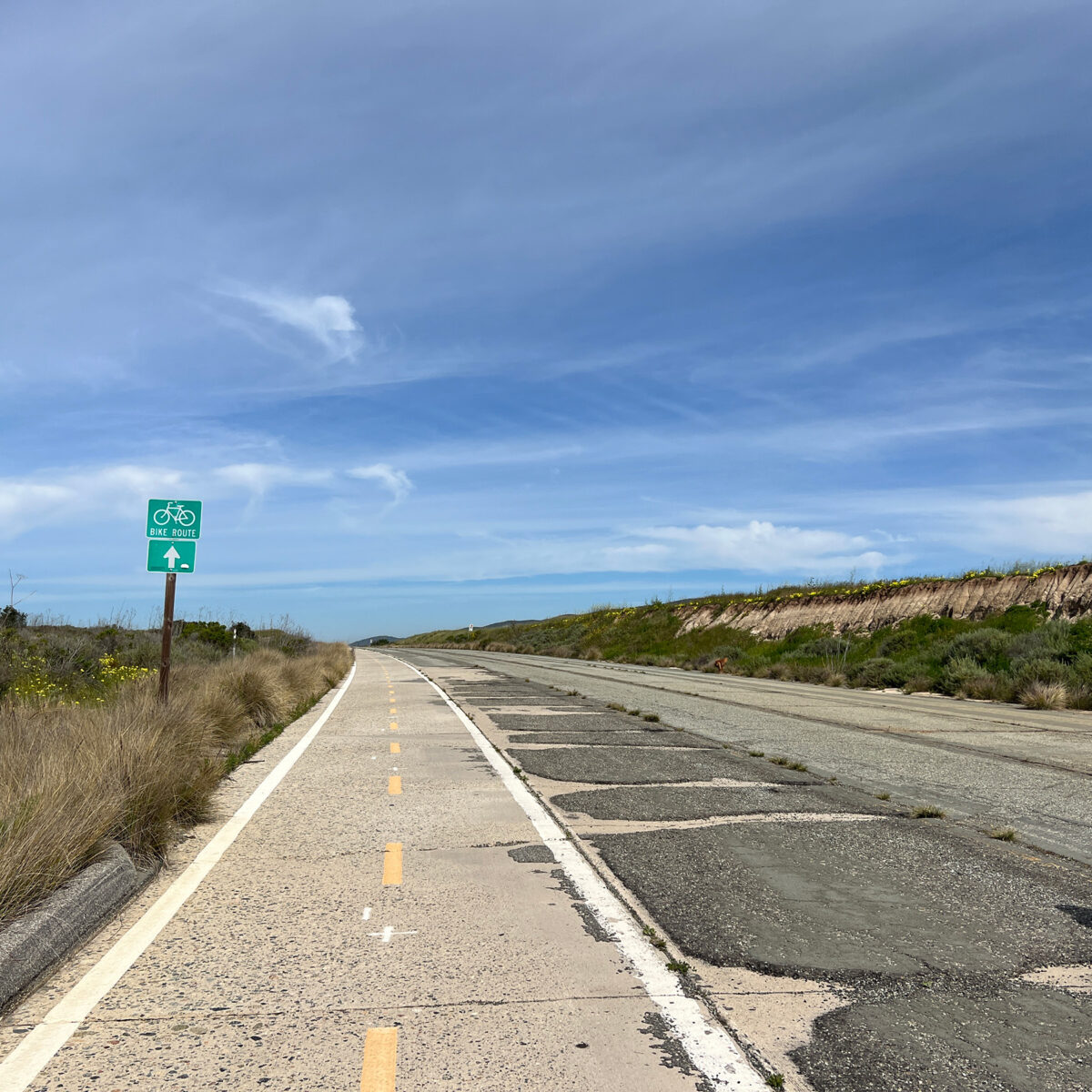
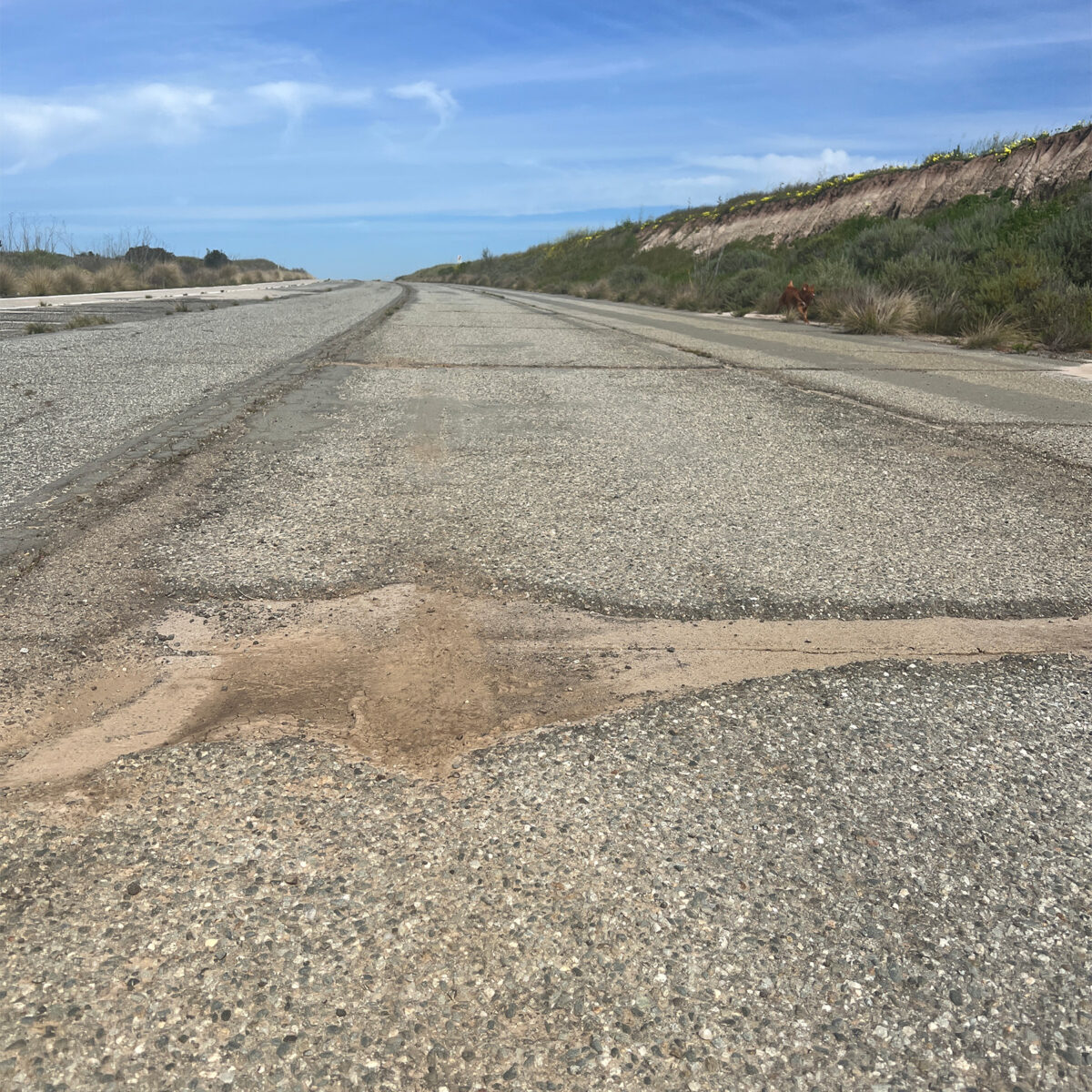
Rough Road on Pacific Coast Highway
Potholes in the old Pacific Coast Highway
Cracks and Grass growth along the old Pacific Coast Highway

Another important aspect of setting tire pressure is the temperature for the day. The risk is setting up a tire pressure in a temperature that is different than in your race. If you’ve ever been to a transition and heard tires popping as the temperature rises you can be sure that someone either set their pressure too high to start with or set the pressure in a cold environment. For every 10 degrees you raise the temperature, your tire pressure will increase by roughly 2%. 

The forecasted temperature for the day has a high of 63 degrees Fahrenheit. The best way to set your tire pressure is to warm up the tires with a few laps and add air near 63 degrees. If you are unable to find a similar temperature you can do the math to adjust your temperature. 

Calculating Tire Pressure

The rough roads of the old Pacific Coast Highway make up roughly 25% of the bike course. Because such a large portion of the course is rough we want to take this into consideration for our ride. Since you will not be adjusting your tire pressure before and after the rough section what is your best bet?

We look at it as an average. Pulling data from our tire pressure charts for a 28mm tire and a 170 lbs rider and bike weight we see a 77.7 psi recommendation for medium pavement and 71.3 for rough pavement. The difference between the two is 6.4 psi. Since 25% is rough we will want to pressure down by 25% of the 6.4 psi. Therefore:

6.4 psi x 25% = 1.6 psi

77.7 psi – 1.6 psi = 76.1 psi

While the difference is small it will help with your overall time for the course. Remember you are much better being lower in pressure to avoid the impedance break point and this will definitely help on the rough section of road.

Need Help Getting Ready for Ironman Oceanside?

If you are racing Ironman Oceanside and would like to talk about wheel selection, tires, tire pressure, or anything else, feel free to book a Wheel 1 on 1. We’d love to help you be your fastest on race day. 


source https://blog.flocycling.com/aero-wheels/tire-pressure-wheel-selection-for-ironman-oceanside/

Thursday, March 23, 2023

FLO Cycling + Alpha Win Triathlon Series

We are thrilled to announce that FLO Cycling has become the official wheel partner of the Alpha Win Triathlon Series. This is an 11 race series across California, Florida, and New York, perfectly suited for FLO Wheels.

Find FLO at Races

At each race starting in July of 2023, you will find a display of FLO Wheels and an inflation station where you can find your ideal tire pressure and use the FLO Air Gage to set you optimal tire pressure.

There will also be opportunities to win FLO products throughout the year, a discount for all athletes, and exclusive content aimed at making you faster.

Alpha Win Race Schedule

  • Ocala, FL Triathlon – 04/01/2023
  • Napa Valley, CA Triathlon – 04/08-09/2023
  • Hudson Valley, NY Triathlon – 07/01/2023
  • June Lake, CA Triathlon – 08/19/2023
  • Lake George, NY Tri Camp – 08/11-13/2023
  • Lake George, NY Triathlon – 09/02-02/2023
  • Saugerties, NY Triathlon – 09/17/2023
  • Palm Springs, CA Triathlon – 10/21/2023
  • Napa Valley, CA Triathlon – 10/28/2023
  • San Dimas, CA Turkey Triathlon – 11/19/2023
  • Sarasota, FL Triathlon – 01/07/2023

Getting Ready to Race

If you’re looking for the best wheels for your upcoming race please feel free to book a Wheel 1 on 1 or check out our triathlon guide. If you already have the perfect wheels and need advice on tire pressure, tire selection or anything else reach out and we will be happy to help you.


source https://blog.flocycling.com/news/flo-cycling-alpha-win-triathlon-series/

Friday, March 17, 2023

Setting Tire Pressure On A Nascar Track – Clash Miami

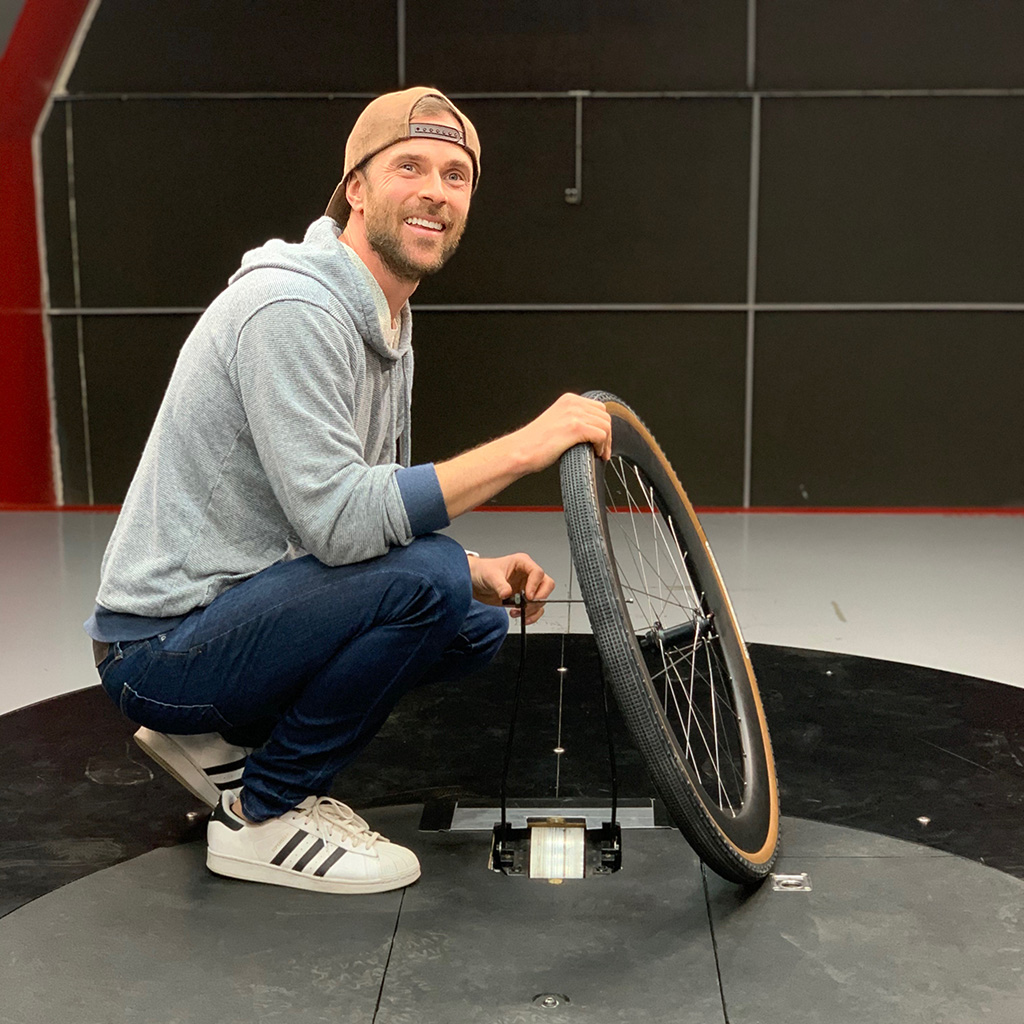
Last week I was invited to Clash Miami to run a wheel pit for the pro races. To make a long story short, Clash Endurance created a triathlon series that takes place on Nascar track. I was on site at Homestead-Miami Speedway, host of Clash Miami, with a number of FLO wheels incase a pro had a mechanical issue. We had an official FLO Wheel Pit that mimicked a Nascar pit stop, fire suit included! Ultimately, no one needed help but it was a lot of fun!

While I was on site I examined the track and worked with a number of athletes to discuss tire pressure on such a unique course. The track is rough with an exposed aggregate which allows cars to hold the corners. For triathletes, this means lower pressure than you are used to. We also discussed temperature and how it impacts tire pressure and aerodynamics in a track environment. I shot a video when I was on the track and recorded a podcast with a recap once I got back to the office. Take a look/listen to learn about tire size, pressure, etc, on a Nascar track and let us know your thoughts.

Setting Tire Pressure on a Nascar Track – YouTube

Setting Tire Pressure on a Nascar Track – Podcast

Video Transcript

00:00:00:17 – 00:00:18:17

Jon Thornham

Hey, I’m out here at Homestead-Miami Speedway for Clash Miami. I have an official fire suit on him in the FLO wheel pit for the pro races. If anyone has any issues, they come in. They can now swap their wheel out for a four wheel. We’re going to talk about a couple of things here today on a unique course like this, which is the speedway we’re going to talk about, the surface conditions, setting tire pressure.

00:00:18:17 – 00:00:35:24

Jon Thornham

I want to talk about tire size and tire width also a touch on some aerodynamics. So let’s check it out. What you’re going to see here is the track. So this is the track that the athletes go around. Pretty crazy bank on the other side there. What’s really unique about this course is it’s a NASCAR course and the pavement itself is actually medium to almost rough.

00:00:35:29 – 00:00:54:09

Jon Thornham

It’s got a pretty interesting texture. I’ll show you here in a minute. And this far south, what we can get, though, is a very extreme temperatures. You off to 136 degrees and was track temperature. We had a gun on this the other day and it’s 136 degrees. So as a rule of thumb, remember, for every ten degrees, you’re going to increase your tire pressure by about 2%.

00:00:54:24 – 00:01:19:19

Jon Thornham

So it’s very, very important that when you’re setting up for a race like this that you’re either accounting for that or you’re setting up in a temperature that is similar. Sometimes it’s not possible. So how do you adjust for that? If you can get to the temperature? We always recommend inflating outside, not in like a cold hotel room or something like that, but if you are outside and you know that it’s going to get hotter by the time you’re on the course, you can do the math and you can basically pressure down some.

00:01:19:29 – 00:01:42:02

Jon Thornham

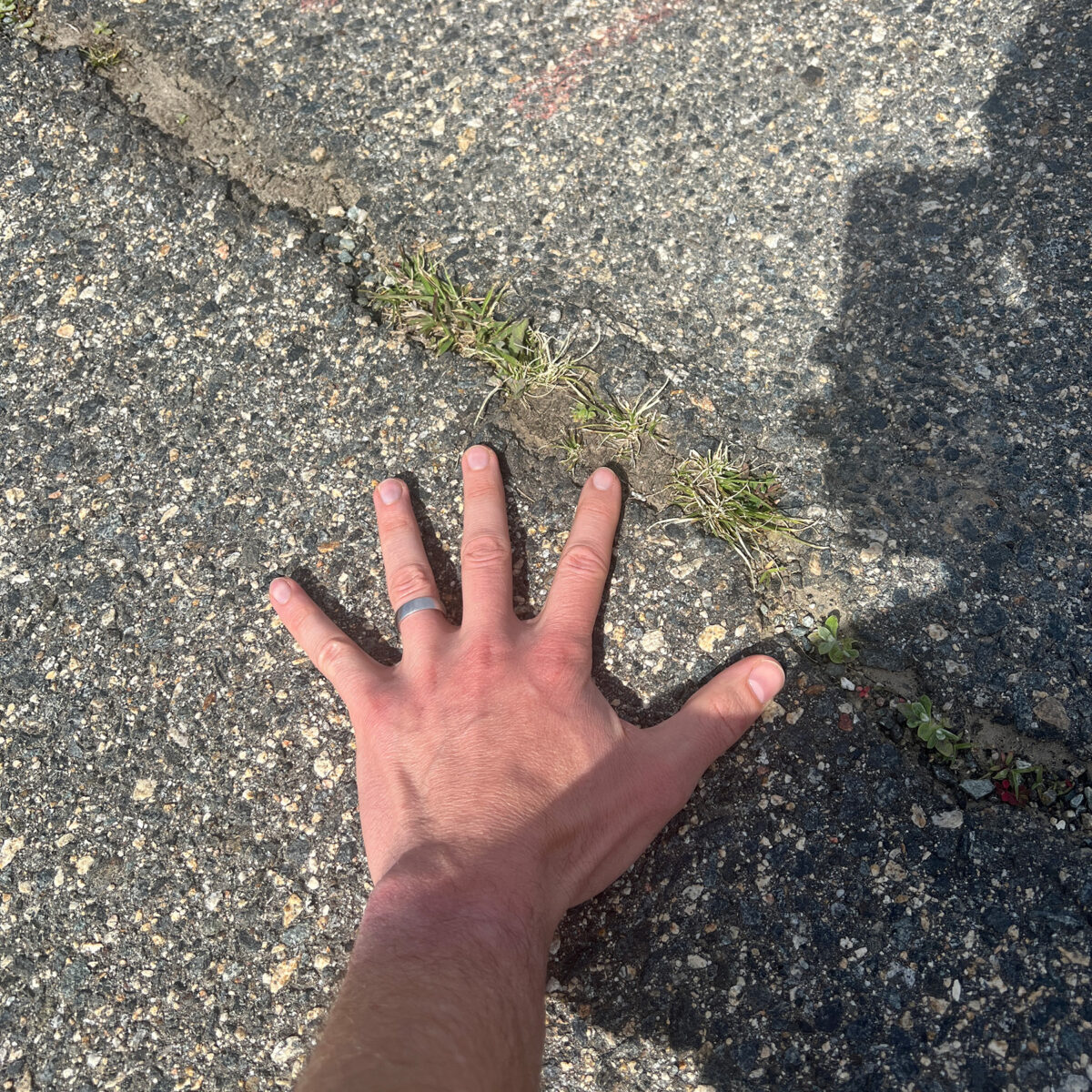
That’s why something like the new FLO Air Gage is really beneficial for something like this. You can get very accurate tire pressures, ensuring that you are not going to over inflate for race like this. This here is the actual surface that you’re going to look at. Now I’m can put my hand down here so you can kind of get a scale for what this looks like, but you can see how there’s actually quite a few pieces of aggregate that are in here that are exposed.

00:01:42:14 – 00:02:03:07

Jon Thornham

Now, part of the reason for that is because, again, this is a NASCAR track. So as cars are coming through these corners, very, very high speeds, they do need some sort of durability on this track, some sort of roughness to make sure that they’re going to hold those corners. For an athlete like yourself, that’s going to become important because the rougher you get, the lower you’re going to want to manage that tire pressure.

00:02:03:19 – 00:02:22:21

Jon Thornham

So it’s important to adjust your tire pressure for these tracks. Now, if you’re wondering how do you set your tire pressure based on temperature? Is it air temperature or surface temperature? Great question. So one thing we always recommend, is it before you inflate your tires, if you can go out and you can make a few laps, what that’s going to do is it’s going to warm up the rubber on your tires.

00:02:23:01 – 00:02:37:26

Jon Thornham

It’s going to get you closer to the actual consistency that you’re going to be when you’re racing. Now, the second thing you want to consider is your tires are actually making some contact with the surface of the road. So they will warm up and it’s going to be closer to the temperature of the track as it is to the air.

00:02:38:08 – 00:03:00:29

Jon Thornham

So it’s not exact, but it is closer. So make sure you adjust based on the road surface temperature, not always just the air temperature. We have three FLO wheels here, all with different sized Continental GP 5000. This is a 25 millimeter tire, a 28 millimeters tire and a 32 millimeter tire. Now, it is important to know that when you’re riding a course like this, you want to size your tire properly.

00:03:01:10 – 00:03:18:21

Jon Thornham

So when you’re looking at tire size at a course like this, I’m going to get right down here on the pavement so you can see it. It is very rough based on the tires for NASCAR and to be able to hold these banks now from a tri perspective, you’re going to want to get the widest tire that’s going to fit your frame.

00:03:19:01 – 00:03:35:26

Jon Thornham

It’s important because some tires are too wide for certain frames. So you want to get the largest tire that you can that will fit your frame. Now for a FLO wheel 28 So to optimize aerodynamically, you can get away with 32s, but on a course like this, rolling resistance becomes very important because of the roughness of the surface.

00:03:37:19 – 00:03:53:06

Jon Thornham

So remember, on a course like this, you’re going to want to have your tire pressure set low enough so that you’re going over the bumps as as opposed to bouncing over them. So all those small pieces of aggregate, you don’t want to bounce up and down. That’s taking your watts that you’re putting in the pedals and moving you up and down as opposed to moving you forward.

00:03:53:21 – 00:04:17:24

Jon Thornham

Now, the best way to do that is to have a lower tire pressure. But the lower the tire pressure gets, the larger the contact that you get when you have a narrow tire, like a 25 millimeter tire, what happens is your contact patch gets longer and longer, longer under that under the tire, and it has some width to it, but not as much as a 32. A 32 because of its width allows you to have a shorter contact patch and a wider contact patch.

00:04:17:24 – 00:04:37:11

Jon Thornham

The area is the same underneath, but it changes the shape. Now a long contact patch like that causes issues because it’s harder to roll over that contact patch. Think of a moment you’re standing on your toes. It’s a lot easier to push you over than it is if you have skis on your feet. So we want to make that contact patch as short as possible to help with rolling resistance.

00:04:38:23 – 00:05:03:19

Jon Thornham

When you look at a wheel like this on the ground, you will see a smaller 25 millimeters higher as it rolls. It’s going to have to go over those bumps that aggregate in the period when you have a larger tire like a 32, we’ll see that it makes it easier to go over the aggregate and the pavement. What about aerodynamics and of course, like this?

00:05:03:19 – 00:05:22:28

Jon Thornham

Well, what’s interesting about this is it’s basically like a giant velodrome and you have a complete loop. So what’s unique is that because the walls are banked, as I look around here, you can see this, there is airflow in here, but in certain areas, it’s going to be a lot quieter and a lot. Stiller than you would have if you’re out in the open road.

00:05:23:11 – 00:05:43:13

Jon Thornham

The other thing you want to consider is that if there is airflow in one direction, you may be in a headwind in the other direction. Your tailwind so kind of balances itself out. Now, aerodynamics are still very important in a race like this. I’m not saying that they’re not. They’re incredibly important. But you also definitely want to take into consideration heavily the resistance because of the unique aerodynamic situation that you see in the course like this.

00:05:44:09 – 00:05:59:12

Jon Thornham

All right. Let’s do a quick recap. So in a course like this, make sure that you’re getting out early, setting your tire pressures, maybe with a lap or two so that you’re accounting for the temperature and make sure you understand what the temperature can be later in the day when you’re actually racing 2. because of the surface like this, that is rougher.

00:05:59:12 – 00:06:14:24

Jon Thornham

We have some aggregate this exposed. We’re going to want to make sure that we’re going to have a tire size that is wide enough. It’s going to allow you to get lower going up pressures where you’re optimized around the rolling resistance, which really great about this is it’s very well taken care of. So you’re not going to hit something like a pothole.

00:06:14:24 – 00:06:31:16

Jon Thornham

You can get those lower pressures to make sure that you’re optimized for that again, aerodynamically. It’s very important. Still very important. So in something like this. But let’s focus a little bit more on the rolling resistance here because of the course and how unique it is and what’s not to make the tires too wide so that you’re blowing out the aerodynamics of your wheels.

00:06:31:28 – 00:06:48:00

Jon Thornham

Let’s make sure you’re using being smart about it and you’re going to optimize for those aerodynamics and rolling resistance. If you have questions about this, please feel free to reach out. We have tire pressure charts and everything here we can help you get set up with the right pressures, of course, like Homestead-Miami Speedway or Daytona later in the year.


source https://blog.flocycling.com/news/setting-tire-pressure-on-a-nascar-track-clash-miami/

Monday, March 6, 2023

Lower Wheel Prices – Affordable DNA

To be frank, COVID and the resulting supply chain issues really sucked for FLO. Ultimately, we made two price increases to weather the storm but both times felt wrong. Well-engineered cycling wheels at affordable prices have always been a part of our DNA.

We promised that if the costs started coming down, yours would too. We’ve been working hard to find creative ways of lowering our costs without changing the product. The quality and durability is still same. As of March 1st, 2023, we’ve lowered our prices on all FLO Wheels to bring back affordability. We’re excited about 2023 and hear this year is being referred to as “the return of endurance sports.” Here are the new prices for each wheel model.

FLO All Sport Series Pricing

FLO Gravel Series Pricing

This brings a set price down from $1,748 to $1,498 which is a large savings. This brings back our affordability. What’s always been unique about FLO is that we are consumer direct. While you may find other wheels close to this price range, the components, engineering, and rim construction will likely be stripped down to hit this price. Our consumer direct model allows us to offer the best components and engineering at affordable prices.

If you’ve purchased a set of wheels in 2023 at full price then please reach out and we will make sure to issue you a price correction.

Excitement for 2023

This year we’ve already released two new products, the FLO Air Gage and the FLO Locking Chuck. This is just the beginning. We have a number of other new products that will be released this year, all with affordability in mind. Prior to 2020, we had a list of new products we were working on but all were placed on a back burner for a myriad of reasons. Early last year we started from scratch with new ideas and those ideas are soon to be products for you. Stay tuned for stories on each of these new products and ways to get early access. NOTE: We will not be releasing new wheels this year.


source https://blog.flocycling.com/news/lower-wheel-prices-affordable-dna/

Monday, February 13, 2023

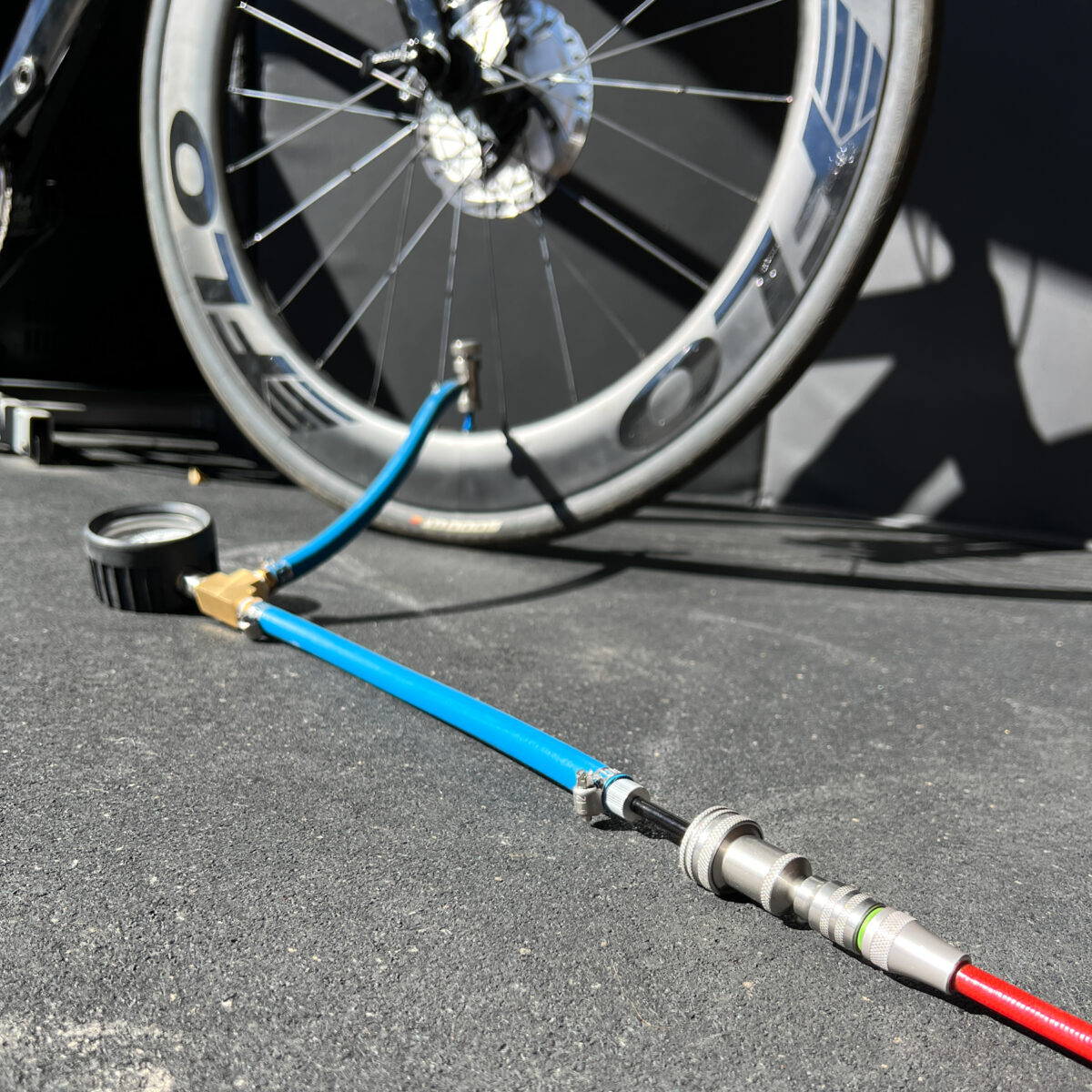
Introducing FLO Air Gage – Save Time with Accurate Tire Pressures

Rethinking the Pump – The FLO Air Gage

A couple years ago a good friend and fellow researcher, John Mercer, called me voicing a frustration he had recently ran into during transition at his race. John’s name may be familiar to you, he and his team at UNLV worked side by side with me for 18-months developing the on-road protocol for testing rolling resistance, which lead to proving that wider internal rim width is faster. During this deep dive into rolling resistance, we learned and expanded upon the importance of tire pressure and the concept of an “impedance break point”. An inaccurate read of tire pressure could cost you up to 6 minutes over an Ironman. John knew this and his frustration was that he had no way to accurately inflate his tires during transition without a hassle. A standard floor pump has a gage but with the exception of a few expensive ones, the gages are often inaccurate, plus they are difficult to transport. Mini pumps travel well but have no gage. This is why we developed the FLO Air Gage

FLO Air Gage

The Innovation of The FLO Air Gage – Modular Inflation

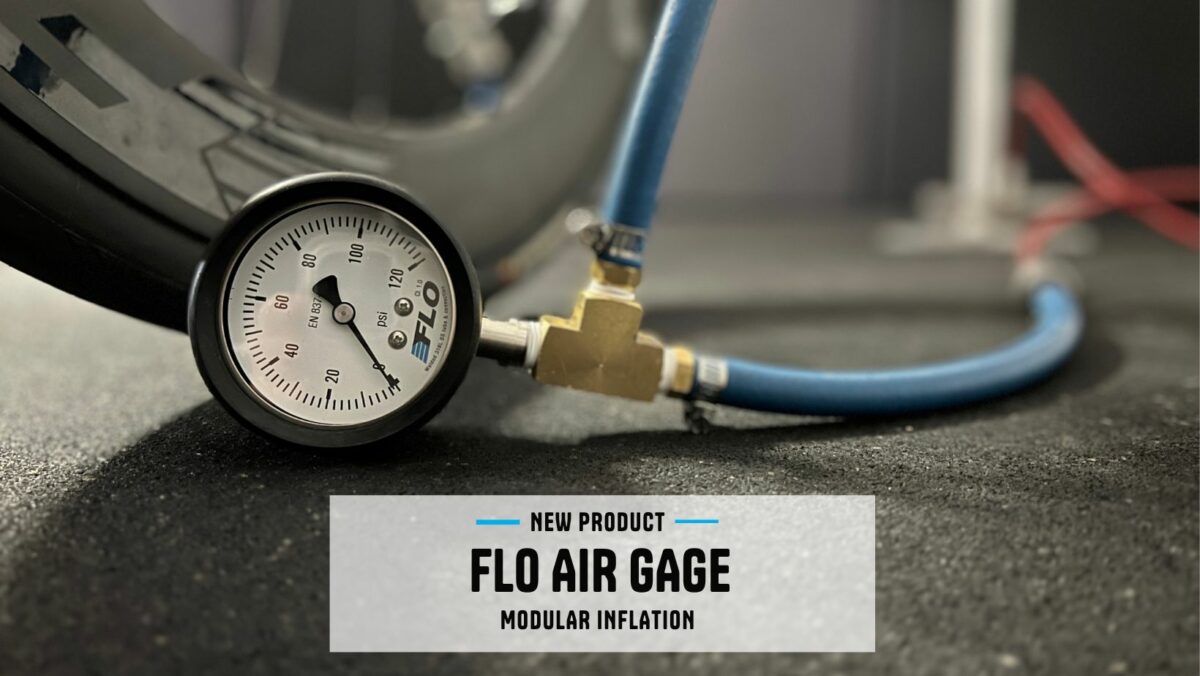
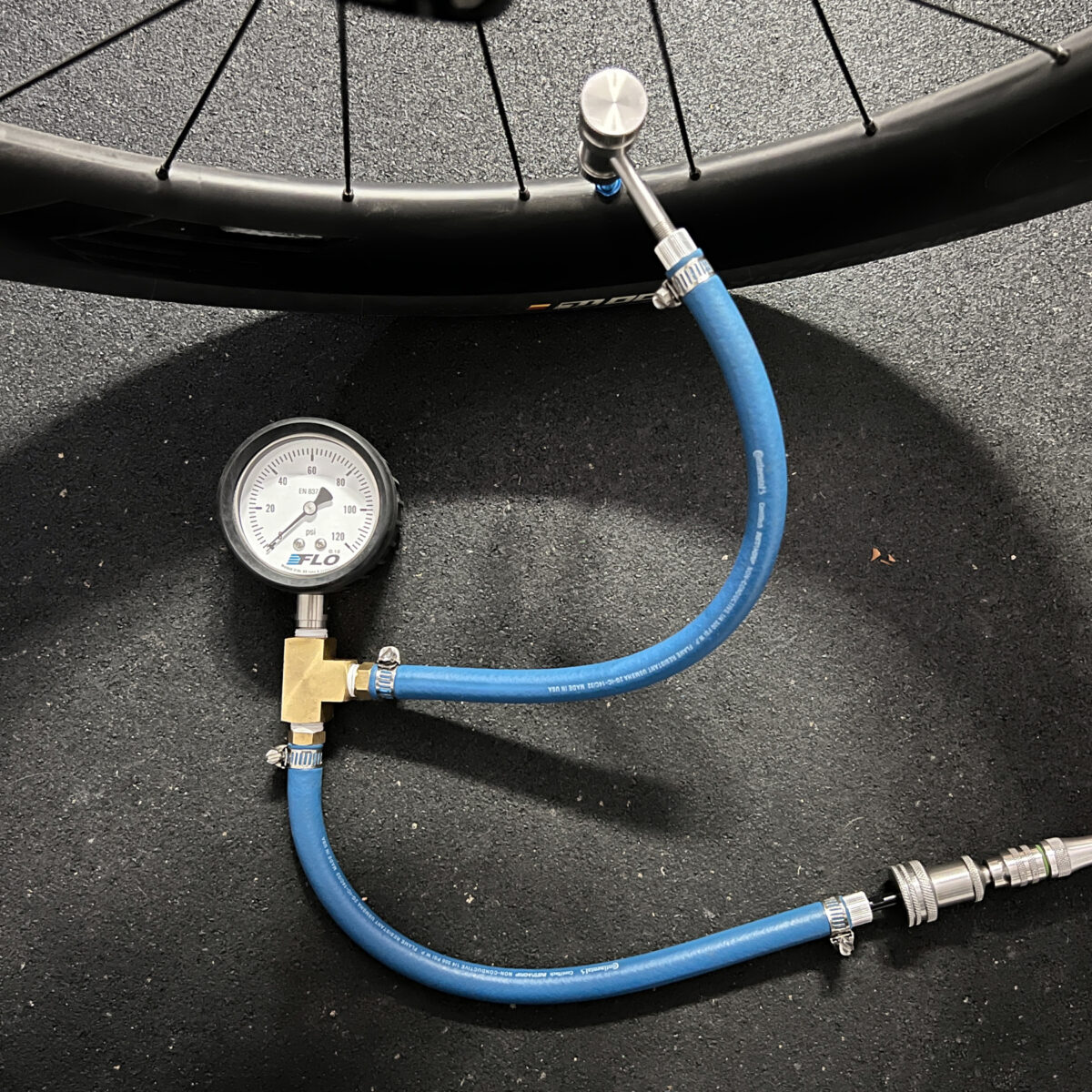
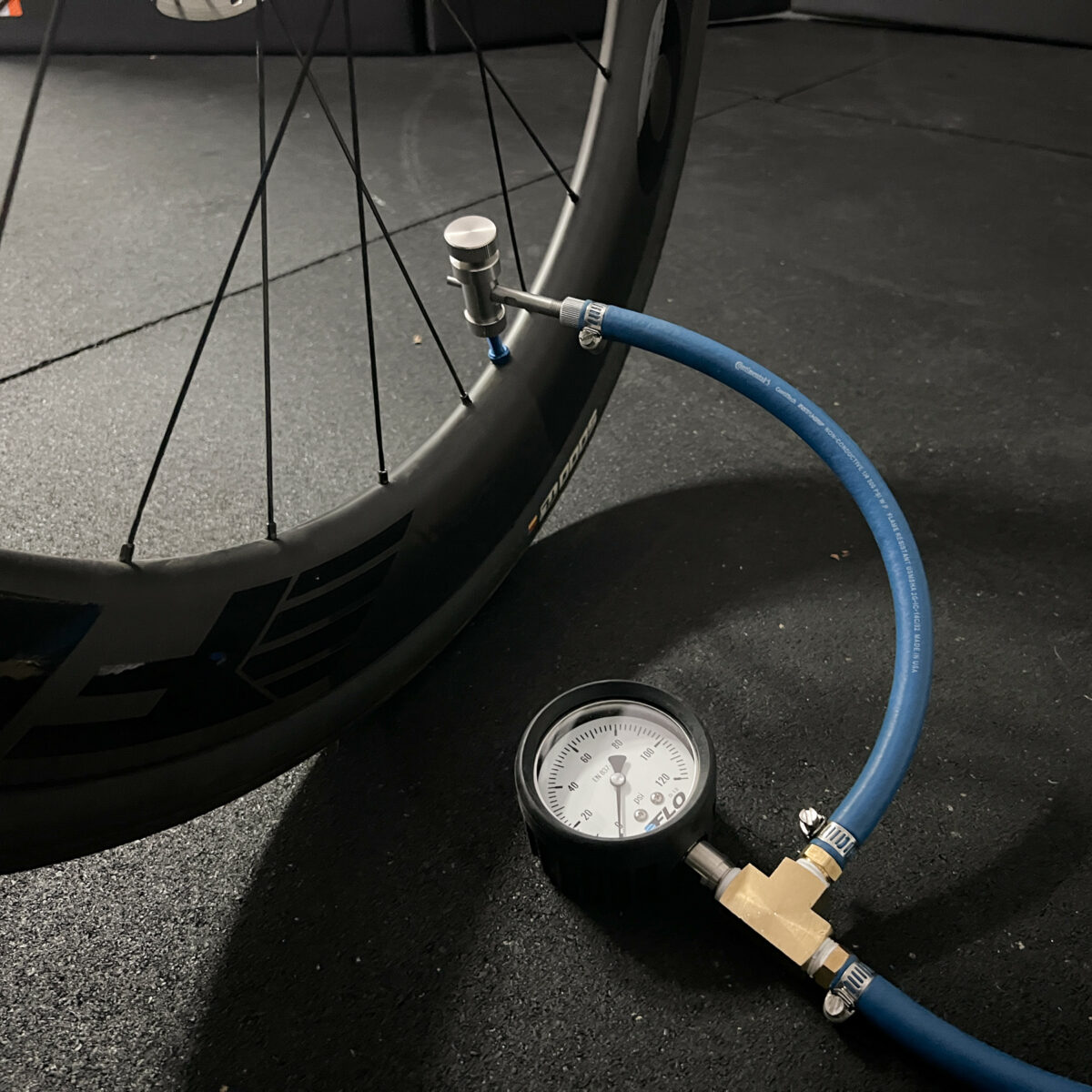
The FLO Air Gage is an accurate gage that connects to any pump. The FLO Air Gage connects inline with a mini pump, providing a gage to set your pressure. It also connects to a floor pump so you can bypass the floor pump gage and assure better accuracy. Having the ability to connect to multiple different pumps introduces a new category we are calling “modular inflation.”

An Education on Pressure Gages

If you think about pumps, the most important part is the gage. Interestingly, the number you read can be misleading. A gage has an accuracy known as a “Percent of Span.” Span is the total range of the gage, for example, 0-300 psi. To determine how much your gage can vary, multiply the percent of span by the span, or total range. Let’s look at an example from a standard floor pump:

  1. A gage with a 3% accuracy of span with a 300psi has an accuracy of +/- 9psi. This means that if your gage reads 80psi with a +/- 9psi accuracy, your tire pressure can be anywhere from 71psi to 89psi. 

As you can see, tire pressures can vary vastly from what the gage reads. As a cyclist, it’s problematic to have such a large range which can cost you speed and time. 

FLO Air Gage

Why Does Accurate Tire Pressure Even Matter?

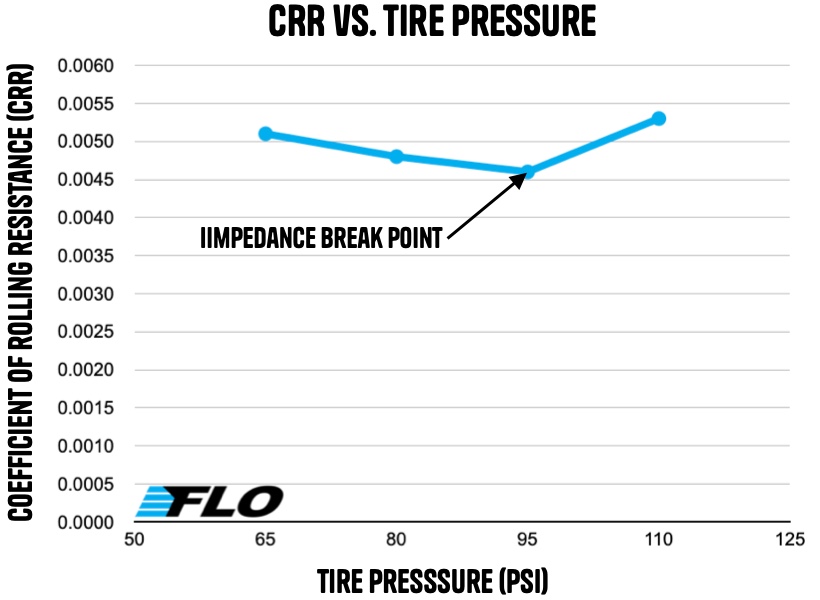
Our on-road rolling resistance testing taught us a lot about speed, tire pressure, and the impedance break point. We know that the higher your rolling resistance, the slower you go. Up to the impedance break point, change in rolling resistance decreases slowly as you increase tire pressure. Once the tire pressure surpasses the impedance break point, your rolling resistance spikes drastically. Therefore, having a tire pressure that is too high is much worse than having a tire pressure that is too low. The effect is asymmetric. The graph below shows how quickly rolling resistance can change. 

Most importantly, the rule of thumb is that for every 1 psi your tire pressure is over the impedance break point, you lose 1 watt. So, if your tire pressure is reading 80psi but your actual tire pressure is 89psi, you are giving up 9 watts! That is a big deal to any competitive cyclist.

A New Standard for Accuracy

We designed the new FLO Air Gage to have a 1% percent of span accuracy with a span of 120psi. Therefore, your tire pressure is guaranteed to be +/- 1.2psi of what you’re reading on the gage. For the same 80 psi read, your pressure will be between 78.8psi and 81.2psi. The modular design of the FLO Air Gage brings this accuracy to your home, your training ride, and especially, your race. 

This brings us to the design parameters and innovations of the FLO Air Gage.

FLO Air Gage

The Design Parameters

We can’t say it enough- accurate tire pressure matters. So how can we design something with great accuracy that is also transportable so you can use it anywhere? (Note: this article details the FLO Air Gage but other new products are also mentioned. We will have follow-up articles detailing those, too.) The following were our design parameters:

  1. An accurate, affordable, reliable, and rugged gage that reflects a span of cycling pressures
  2. Works with any Presta pump 
  3. Ability to bleed pressure
  4. Effective and reliable connection to a wheel
  5. Quick pump head removal to limit air loss
  6. Compact for travel 
  7. Durable and replaceable parts 
  8. Affordable as a system 

The Gage – Accurate, Affordable, Reliable, and Rugged With a Span for Cycling

We partnered with Ashcroft for the gage. Ashcroft is arguably the best gage manufacturer in the world and manufactures their gages in the USA. 

For accuracy, we lowered the percent of span to 1% and we had a custom span design with a max pressure of 120psi, which covers 99% of all cycling applications. You will never be more than +/- 1.2 psi on any reading you see on the FLO Air Gage.

For reliability, we chose an analog gage vs. a digital gage. An analog gage works all the time. No early morning transitions with a dead battery. Plus, it is also more affordable. A digital gage with the same accuracy was more than 8x the price of the analog gage.

Finally, to keep the FLO Air Gage safe as you travel the world riding and racing, we covered the gage with a rubber boot. 

FLO Air Gage

Versatile – Works with any Presta Pump 

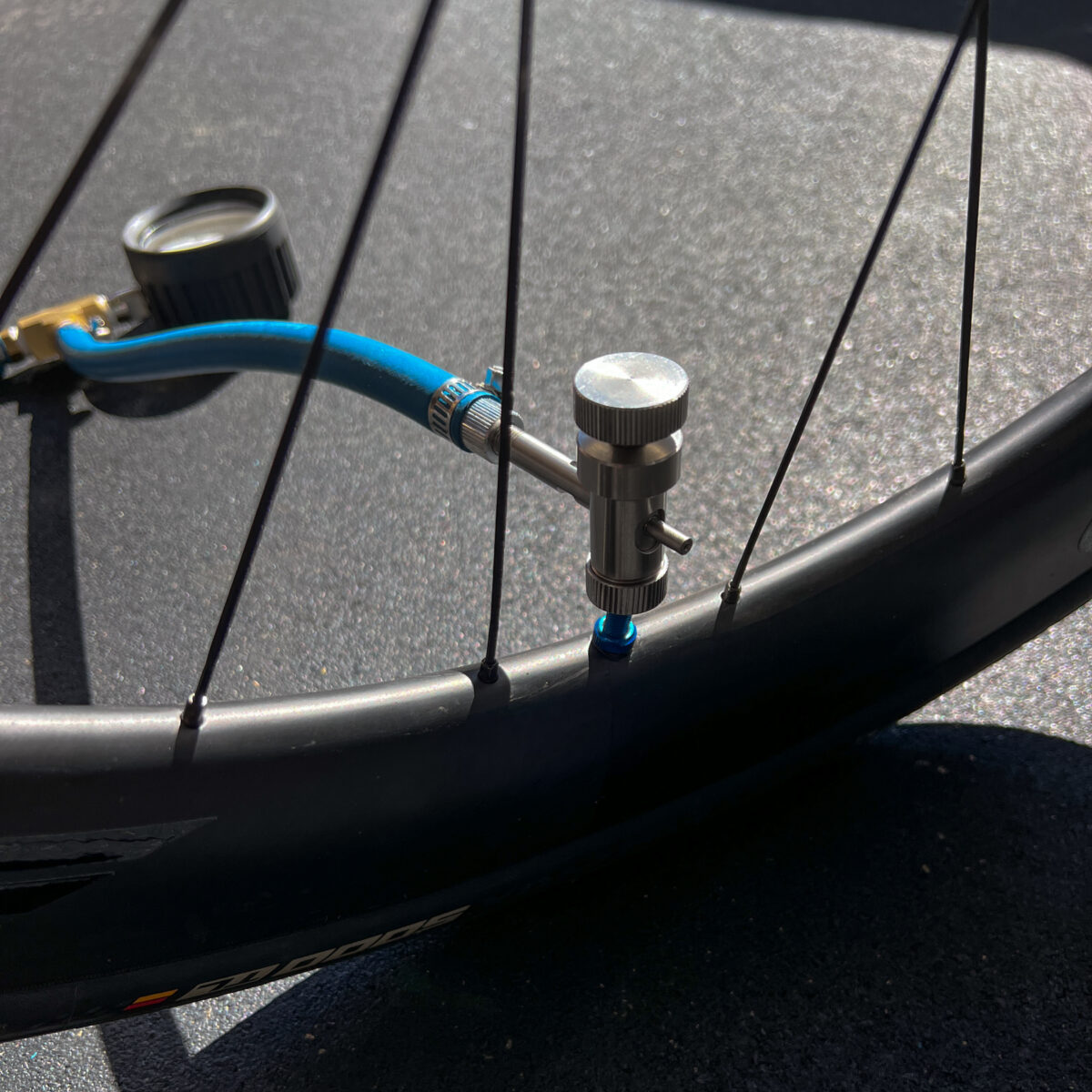
The vision was for the FLO Air Gage to be versatile and to have the ability to with any standard Presta pump. We created a custom Presta-to-hose fitting that accepts any removable core valve extender allowing for easy connection to any Presta pump. It’s also easily serviceable Should the valve get damaged. 

Precise – Ability to Bleed Air Pressure

In our experience, and what we use for testing on-road and in the wind tunnel, the most precise way to set an accurate pressure is by over inflating the tire and bleeding air until you hit your target pressure. Once the pump is removed from the FLO Air Gage the removable core valve acts as a bleed valve. 

To hit your desired pressure: over inflate the tire, remove the pump from the Presta valve, then bleed the pressure while watching the pressure on the FLO Air Gage. Removal key points in the next section. 

FLO Air Gage

Effective and Reliable Connection to a Wheel & Quick Pump Head Removal

We looked at number of pump heads for the FLO Air Gage and to be honest, most were really terrible. Here is what we found: 

  1. Plastic pump heads are cheap and break easily and are prone to leaking. 
  2. Aluminum chucks normally do not lock and are a complete pain to use. 
  3. Lever locking Presta chucks either do not have the ability to fine tune the connection, are expensive, or are difficult to remove without air loss.

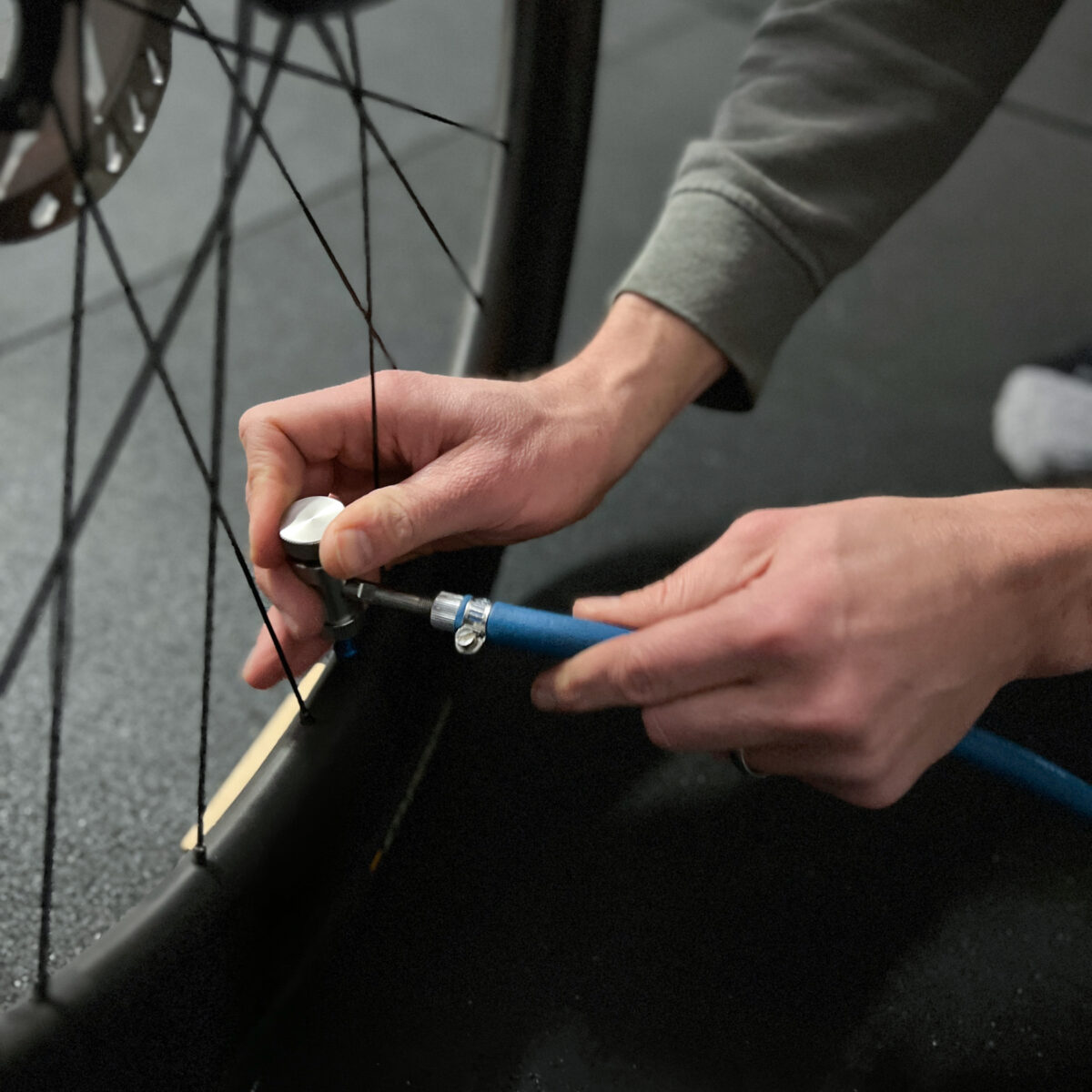
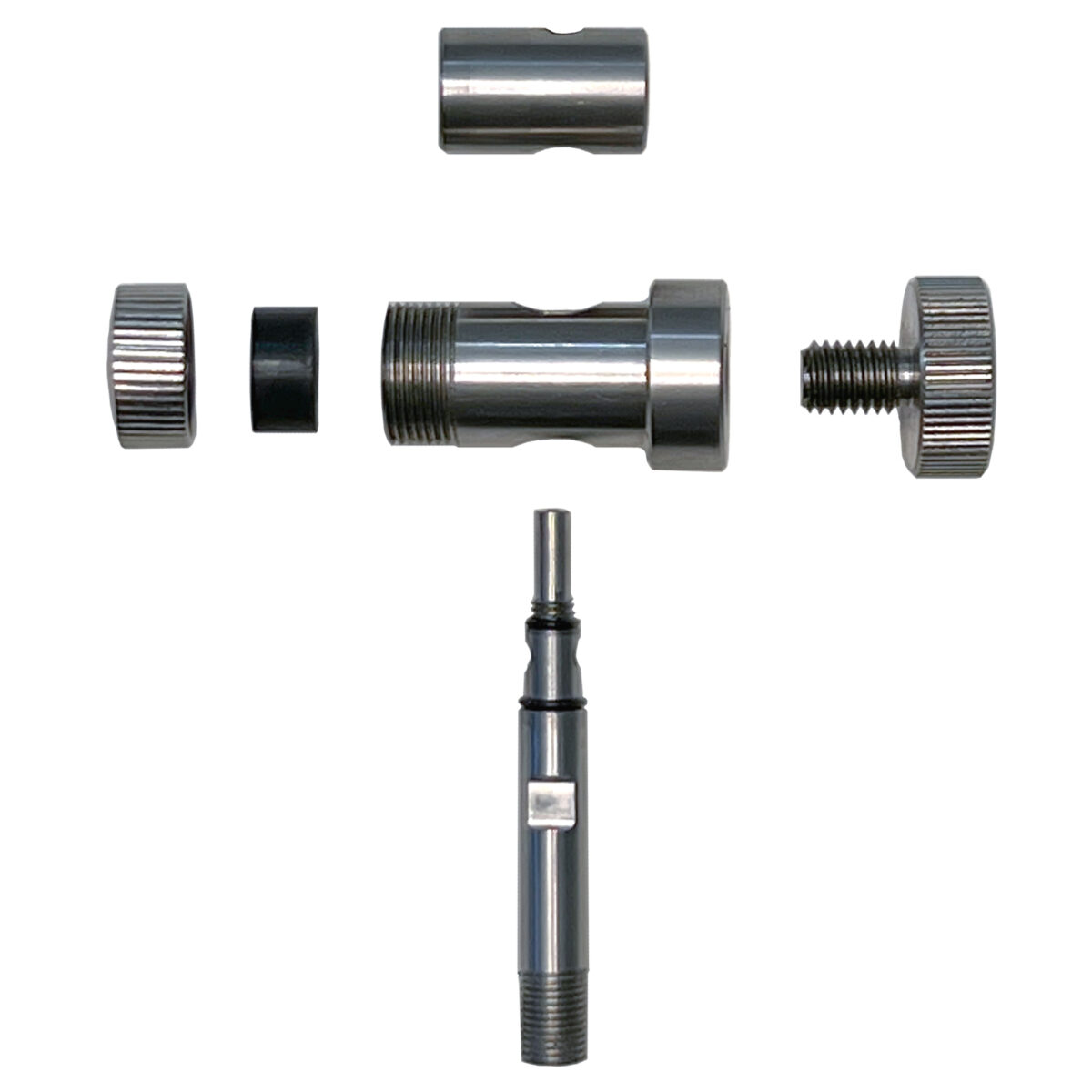
So what did we do? We designed a new locking chuck from the ground up. The FLO Locking Chuck will ship with all FLO Air Gages.  The FLO Locking Chuck is also available to purchase separately for existing pumps. You can read a more in depth article on the FLO Locking Chuck here but a summary of the FLO Locking Chuck features are below:

  1. The FLO Locking Chuck is made from aluminum, steel and rubber. 
  2. Seals to any Presta valve or extender with a dial locking mechanism. Unlike a one-size-fits- all lever, you adjust the dial to your desired closure. 
  3. Costs less than $50. 
  4. A two finger grip that allows for a quick, straight, and clean pull removal. No more wiggle removal—wiggling a chuck creates air loss. 
  5. A Schrader connection for versatility.  The FLO Locking Chuck can be added to any pump that has a Schrader connection.
FLO Locking Chuck Exploded View

Compact for Travel

The FLO Air Gage packs into one small case. The dimensions are in the range of 9in x 7in. We plan to include a travel bag for the FLO Air Gage.

Durable and Replaceable Parts

All parts are made from durable material and free from plastic. Each part is also 100% replaceable. All parts listed below: 

  1. FLO/Ashcroft Gage w/ Boot
  2. Brass Tee
  3. Brass Hose Barbs
  4. Continental Hose
  5. Hose Clamps
  6. Aluminum Presta to Hose Barb
  7. Aluminum Schrader to Hose Barb
  8. Aluminum Presta Valve w/ Removable Valve Core
  9. FLO Locking Chuck

Pricing & Release Date

The FLO Air Gage is $199 and includes all parts mentioned above, including the FLO Locking Chuck. The FLO Air Gage is available for pre-order now and is expected to ship late April/early May 2023. This is a limited production run, so if your are interested, pre-order today!  

What About a Pump?

You may be wondering why we haven’t mentioned a pump product? Stay tuned! We have another exciting modular inflation product announcement coming soon. 


source https://blog.flocycling.com/news/introducing-flo-air-gage-set-accurate-tire-pressures/

Friday, February 3, 2023

FLO Cycling + Big River Gravel Series

We are thrilled to announce that FLO Cycling has become the official wheel partner of the Big River Gravel Series. This is a four race series across Iowa and Illinois, perfectly suited for FLO gravel wheels.

Special Series Winner Prizes

Among other prizes, the male and female season winners will receive a set of FLO G700s. FLO G700s will be displayed at all Big River Gravel races this year.

The race dates and locations are listed below. We’ve also listed the best FLO gravel wheels and tires sizes for each race in the series. If you’d like to learn more about FLO gravel wheels or get expert advice for an upcoming race, feel free to book a Wheel 1 on 1.

Hell of the Wind – 04/22/2023 – Davenport, IA

“Think spring classics. A day in hell if you will. If we get lucky and it rains, be prepared to test your mental grit. The course has the potential to offer riders wind and some technical riding with level B sections.”

Wheel Recommendation for Hell of The Wind

FLO G700

Wheel: FLO G700
Tire Size: 37mm-42mm
Ideal Tire Pressure: See our charts on the G700 page

Burning Quad – 07/29/2023 – Port Byron, IL

“Road + Gravel = Groad. This event is unlike any of the others. The course is made up of tarmac and chip seal, with gravel and dirt sectors. The gravel is fast and features a variety of different flavors of champagne gravel. Tire selection will be key for this one.”

Wheel Recommendation for Burning Quad

FLO G700

Wheel: FLO G700
Tire Size: 32mm-37mm
Ideal Tire Pressure: See our charts on the G700 page

1904 – 09/09/2023 – Illinois City, IL

“1904- It was the last year there were no paved roads in Illinois. All the roads were narrow, curvy and made of dirt, rock, or bricks. The 1904 course very much resembles this pre-paved era. Come venture back in time with us. This will be the third stop of the Big River Gravel Series, and undoubtedly, the toughest event of the series.”

Wheel Recommendation for 1904

FLO G700

Wheel: FLO G700
Tire Size: 42mm
Ideal Tire Pressure: See our charts on the G700 page

Turkey Burner – 11/04/2023 – Eldridge, IA

“The Turkey Burner will be the final stop of the Big River Gravel Series! 2022 was epic, but we think 2023 will take the cake. The Turkey Burner takes place on some of the best gravel roads in Eastern Iowa and will be sure to test your fitness, regardless of what distance you choose to tackle. After finishing, there will be a post race party to celebrate another successful year of cycling.”

Wheel Recommendation for Turkey Burner

FLO G700

Wheel: FLO G700
Tire Size: 37mm
Ideal Tire Pressure: See our charts on the G700 page


source https://blog.flocycling.com/news/flo-cycling-big-river-gravel-series/

Friday, January 6, 2023

Welcome 2023 and Big Changes for FLO

Happy New Year! It’s hard to believe 2023 marks our 11th year in business at FLO. We’ve been able to do something we love for more than a decade and it’s all thanks to people like you. 

In late 2019, we had a full line of new products that were in development but well, we don’t need to rehash 2020 and the resulting supply chain issues, you get the point.

Three big announcements from us as we move into 2023: 

  • Last year we went back to the drawing board to rethink new products. We are excited to announce that we are launching a number of new product categories outside of wheels. Stay tuned for the design journey. We hope you follow along and love them as much as we do. 
  • We also have a brand new website in the works that represents FLO as a brand more than our current site. This will be our fourth website iteration over our 11 years in business. 
  • We have partnered with a race series in the USA as the official wheel and “new product” sponsors. Partnership TBA.  

2023 is being defined as, “the year that endurance sports makes a comeback” but we are also hearing we may be moving into a recession. Ultimately, we have no idea what 2023 will bring but if you love cycling of any type, we are happy you are here. As you make buying decisions moving forward, think of small businesses like FLO and many of our friends in the industry, you are the life blood of companies like ours. We hope to see you out there! Here’s to you and a great 2023!


source https://blog.flocycling.com/news/welcome-2023-and-big-changes-for-flo/

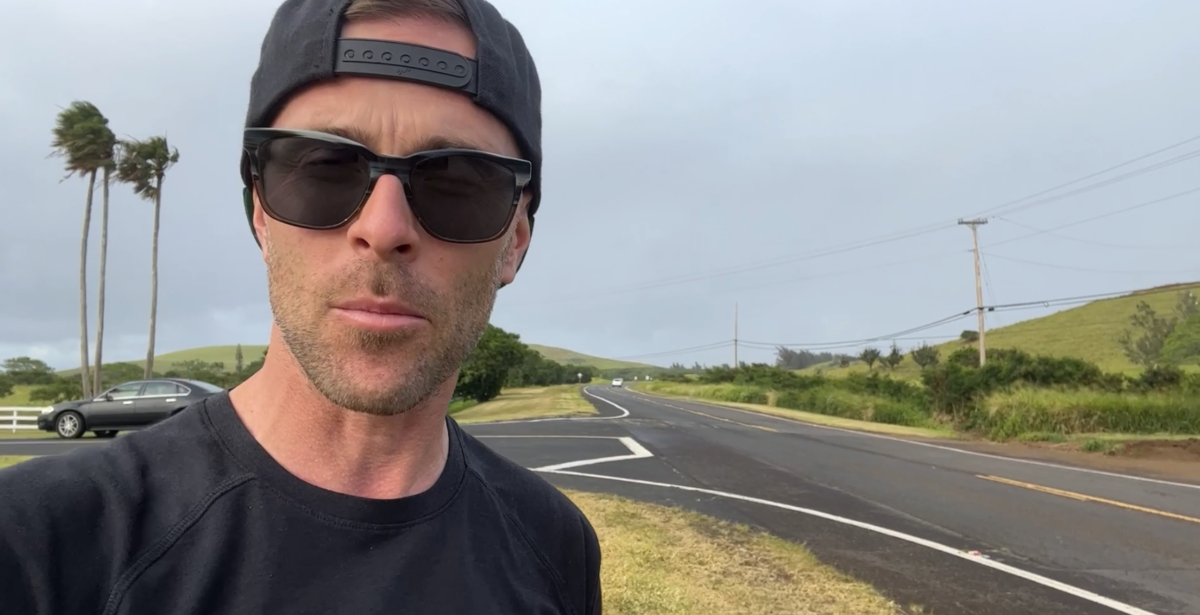
IM Hawaii and IM Kona Wheel, Tire, and Tire Pressure Selection

I recently visited The Big Island of Hawaii and reviewed the bike course for Ironman Hawaii 70.3 and Ironman Kona. I’ve spent time studying ...